
Save Your Natural Tooth with Gentle Root Canal Therapy
At Floss & Gloss Dental, we understand that severe tooth pain can disrupt your life. Our gentle and precise root canal treatments are designed to eliminate infection, relieve discomfort, and preserve your natural tooth — all while ensuring a calm, comfortable experience from start to finish.

What Are Root Canals?
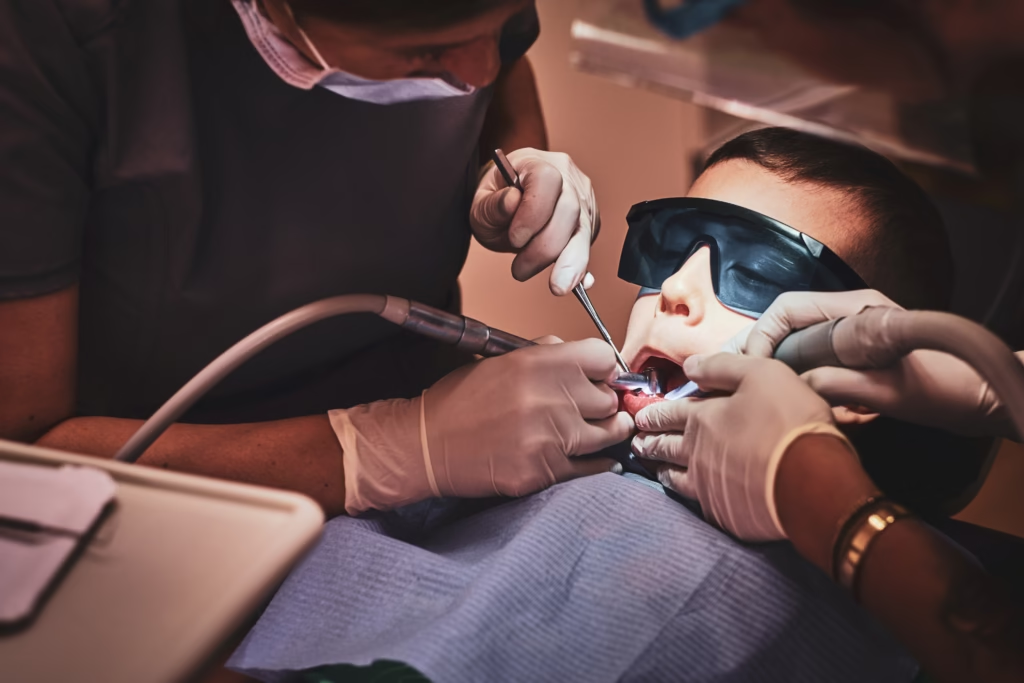
A root canal is a dental procedure used to treat infection or damage deep inside a tooth — within the soft tissue known as the pulp. When bacteria reach this inner layer due to decay, trauma, or a crack, it can cause severe pain, sensitivity, and even lead to abscess formation. Without treatment, the infection may spread, making tooth extraction the only option.
Root canal therapy removes the infected pulp, disinfects the inside of the tooth, and then seals it to prevent further infection. The procedure effectively saves the natural tooth structure, allowing you to bite, chew, and smile with confidence. Modern root canals are virtually painless thanks to advanced anesthetics and technology, and at Floss & Gloss Dental, we take every measure to make the experience as comfortable and stress-free as possible.
Trusted by Leading Dental Organizations
We’re proud members of nationally recognized dental associations that uphold the highest standards of patient care and ethics. Our commitment to ongoing education ensures you receive modern, evidence-based treatment every time you visit.





Why Root Canal Therapy Matters?
Root canals aren’t just about relieving pain — they’re about saving your natural tooth from extraction. Keeping your natural tooth helps maintain proper bite alignment, jawbone health, and overall oral function. Replacing a missing tooth later with an implant or bridge can be more complex and costly, which makes early intervention through a root canal a smart choice.
At Floss & Gloss Dental, we use advanced imaging and modern rotary instruments to perform root canals with precision and speed. Our focus is on preserving the tooth’s strength and structure while ensuring that the treated area is completely infection-free. After the procedure, the tooth is usually restored with a crown for long-term durability and a natural look — giving you both comfort and confidence back.
The Root Canal Process
From diagnosis to final restoration, our dentists at Floss & Gloss Dental follow a precise and patient-focused approach to ensure your comfort and successful treatment.
Diagnosis & Digital Imaging
We begin with digital X-rays and a thorough examination to locate the infection and assess the extent of the damage. Once confirmed, we discuss the treatment plan and ensure you’re fully comfortable before starting.
Local Anesthesia & Access
Your tooth and surrounding area are numbed using a local anesthetic. A small opening is made on the top of the tooth to access the infected pulp chamber.
Cleaning & Sealing the Canals
The infected or dead pulp tissue is carefully removed, and the inside of the tooth is cleaned, disinfected, and shaped. The canal is then sealed with a biocompatible filling material called gutta-percha to prevent reinfection.
Final Restoration
The treated tooth is restored with a filling or a dental crown to strengthen and protect it. The result is a natural-looking tooth that functions just like before — only now, pain-free.



Care You Deserve,
Payments You Can Manage
Everyone deserves a healthy, confident smile — and we make it affordable. Floss & Gloss Dental accepts major insurance plans and offers flexible financing options through CareCredit and other partners. Our team will help you find a payment plan that fits your budget so you never have to delay the care you need.
Frequently Asked Questions
Root canals have an outdated reputation for being painful — but at Floss & Gloss Dental, modern techniques make them as easy and comfortable as getting a filling. Here’s what you should know.
Is a root canal painful?
Thanks to local anesthesia and advanced dental technology, root canal therapy today is virtually painless. Most patients compare it to getting a simple filling. The pain you feel before the procedure comes from the infection itself — the root canal actually relieves that pain.
How do I know if I need a root canal?
Common symptoms include severe toothache, sensitivity to hot or cold, swelling, or discoloration of the tooth. However, some infections show no symptoms at all — which is why regular dental checkups are crucial for early detection.
How long does a root canal take?
Most root canals can be completed in one visit lasting about 60–90 minutes. More complex cases or multi-rooted teeth may require a second appointment to ensure complete cleaning and sealing.
Will I need a crown after a root canal?
Yes, in most cases a crown is recommended to restore strength and function to the treated tooth. After a root canal, the tooth becomes more brittle over time, so a crown helps prevent fractures and extends its lifespan.
How long will my tooth last after a root canal?
With good oral hygiene and regular dental checkups, a root canal-treated tooth can last a lifetime. Proper restoration with a high-quality crown is key to maintaining both durability and aesthetics.
EXCELLENTTrustindex verifies that the original source of the review is Google. Edit after 1 year: These people have helped me become the most confident version of myself and have made me feel like family every step of the way🥰 From the extraction, implant, deep cleaning and all the fillings, I’ve had to have a LOT of work done here and I truly couldn’t have chosen a better place to put my trust🙏 Every little worry and question I have is always answered with ultimate patience and the healing process has always gone better than Google/ChatGPT tells me(which means they do CLEAN work) Y’all have earned a lifelong customer in me and I will reassure everyone to have the confidence to get their dental work done because Floss & Gloss will actually take care of you❤️ From the bottom of my heart, thank you Floss & Gloss team for making me feel safe in a part of life that I had the MOST fear of. Now that the anxiety surrounding my oral health is gone, I can’t stop smiling!! My First Review Over a Year Ago: 1st experience at Floss & Gloss left a great impression! I hadn’t been to the dentist as an adult and had 15 years of decay, as well as a bad toothache. I called up there completely clueless and the people at the front desk helped me through every question and concern I could think of, helping me understand the entire process. I’ve never had insurance before and was extremely worried about payment, but they had an out-of-pocket full dental exam option for $79. After calling around to compare prices, I found that this was extremely affordable. The brief “paperwork” was conveniently on my phone and they quickly had me in the back after only 5 minutes of waiting. I was upfront about being unfamiliar with the process, so Fatima happily explained everything in detail while taking my X-rays and teeth pictures. Dr. Patel easily lives up to their reviews, oozing with charisma and genuine care for their patients. They confirmed everything Fatima mentioned noticing from my data and we came up with a treatment plan that was suited to my budget. After being transparent with them about my financial situation, Dr. Patel and the person who discusses payment(sorry I didn’t get your name) were extremely helpful in getting me the best treatment I could personally afford. I can’t stress enough how easy and personable Floss & Gloss made this entire process🙏 I’m not even nervous to come back for my extraction now and I was TERRIFIED before my visit. They made me feel safe, and you really can’t put a price on that❤️ Also, the TVs playing Netflix are going to be real nice while I’m getting work done⭐️⭐️⭐️⭐️⭐️Posted onTrustindex verifies that the original source of the review is Google. Dr. Haviar is amazingggg… I loved how nice and patient he is and very thorough with the work!!Posted onTrustindex verifies that the original source of the review is Google. The staff is amazing, great place to come.Posted onTrustindex verifies that the original source of the review is Google. javier was really gentle, amazing bedside manner, & explained things really wellPosted onTrustindex verifies that the original source of the review is Google. Been coming here for the last 4-5 years. The team does an amazing time! Fatima always assist and make sure I’m comfortable! Dr. Patel is the Best dentist I’ve had! Highly recommend.Posted onTrustindex verifies that the original source of the review is Google. We are with this clinic since 2019 they are very friendly people respectful staff they very patient with kids my kiddos always excited to go there for checkups I wish miss patel the best thank you Fatima for your patience all the staff and finally the two ladies at the receptionPosted onTrustindex verifies that the original source of the review is Google. I had a great experience at Floss and Gloss, the minute I walked in everyone was so friendly and helpful. Tracie was so helpful with the entire treatment plan. Snow and Fatima were our dental assistant and was informative giving all the information on our treatment. I had A04 surgery and they gave my my permanent teeth same day and they are amazing. This is your one stop shop. Thank you floss and gloss for everything.Posted onTrustindex verifies that the original source of the review is Google. Excellent dentist and very friendly staff. Thank you Dr. Nilam!!Posted onTrustindex verifies that the original source of the review is Google. Fatima did a great job on my teeth